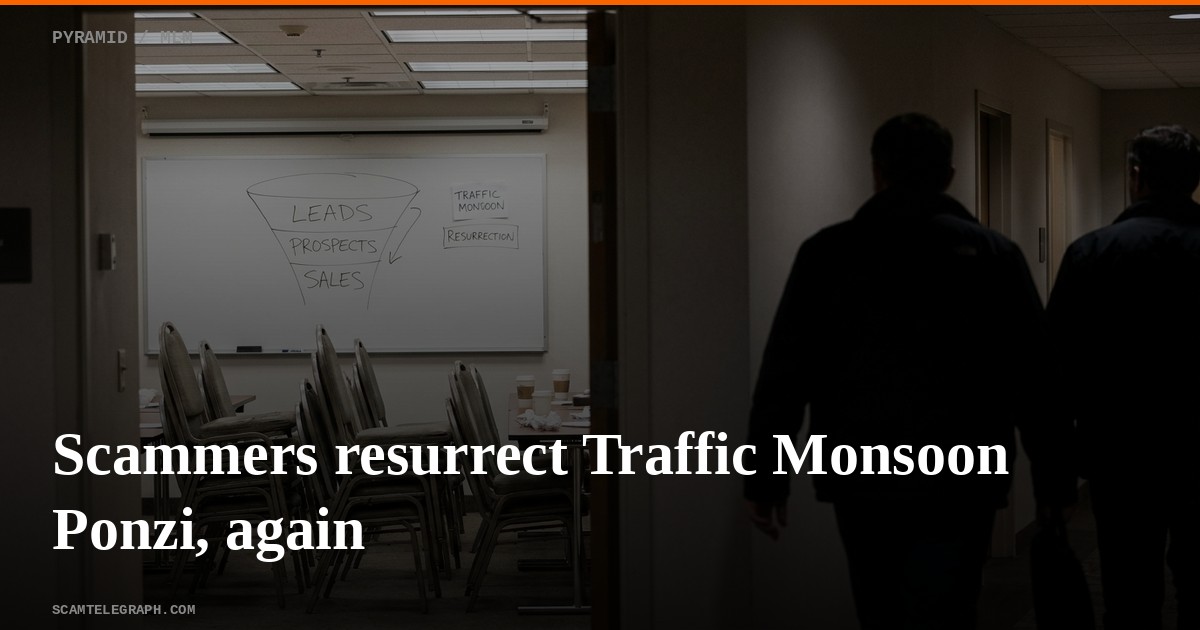
Scammers launched a third iteration of the Traffic Monsoon Ponzi scheme on September 5, 2025, using the domain trafficmonsoon.org. This marks the second time the defunct investment fraud has been resurrected, continuing a pattern of online deception that preys on unsuspecting investors.
The underlying fraud operates identically to its previous versions. Participants purchase "ad packs" for as little as one dollar, with operators promising returns up to fifty dollars per investment. New recruits join through personal referrals, and those who bring them in receive a 25% commission on the funds their victims invest. This structure defines a classic Ponzi scheme, where money from new investors pays false returns to earlier participants until the system inevitably collapses. The promised returns are not generated by legitimate advertising revenue but solely by the continuous influx of new capital.
For this latest iteration, the operators created a fictional CEO named Adrian Gale Mercer. His image is an AI-generated likeness, designed to resemble Charles Scoville, the actual founder of the original Traffic Monsoon. Scoville was incarcerated in 2018, having pleaded guilty in November 2018 to attempted child sexual abuse. He experienced a public mental health crisis in the months leading up to his imprisonment. Scoville has no involvement with either of the recent reboots of his former scheme, and his current status remains unclear.
The use of an AI-generated image of a convicted child abuser as a figurehead for a financial fraud signals a calculated attempt by the current operators to both exploit and obscure the scheme's tainted history. It also suggests an awareness that Scoville's name alone would deter potential victims. The fabricated persona allows the new operators to distance themselves from the original founder's criminal record while still leveraging the brand recognition of Traffic Monsoon.
This Traffic Monsoon reboot follows closely on the heels of another recent Ponzi resurrection. Last month, Australian financial authorities issued a public warning regarding an attempted revival of the Vortic United scheme. The proximity and similar execution of these back-to-back reboots indicate they may originate from the same criminal organization, operating across multiple historical fraud templates.
Traffic Monsoon has proven remarkably durable as a fraud template. The original scheme ceased operations years ago, yet its exact playbook continues to be deployed because it consistently ensnares new victims. People still believe small investments will yield massive returns, and they often assume the losses of their recruits will translate directly into their own gains. The allure of quick, high returns often overrides skepticism, especially in online environments where anonymity is easily maintained.
The scheme's persistent success relies on the fact that many individuals fail to conduct basic research before committing funds. By the time regulatory bodies or watchdog organizations document a new iteration of the fraud, thousands have often already lost money. The perpetrators then simply migrate the operation to a new domain name, restarting the cycle. The original trafficmonsoon.net domain, used for the 2022 reboot, was eventually seized and now distributes auto-download malware, a common fate for defunct scam sites.
The choice to reuse "trafficmonsoon.org" demonstrates a lack of effort to disguise the scheme's origins. Operators are betting that public memory of the fraud's history will fade sufficiently before the next wave of victims discovers its true nature. This strategy has, to date, continued to be effective, allowing scammers to exploit a known brand for renewed illicit gains.
The United States Federal Trade Commission offers resources for reporting online scams at ReportFraud.ftc.gov.
 Charles Scoville