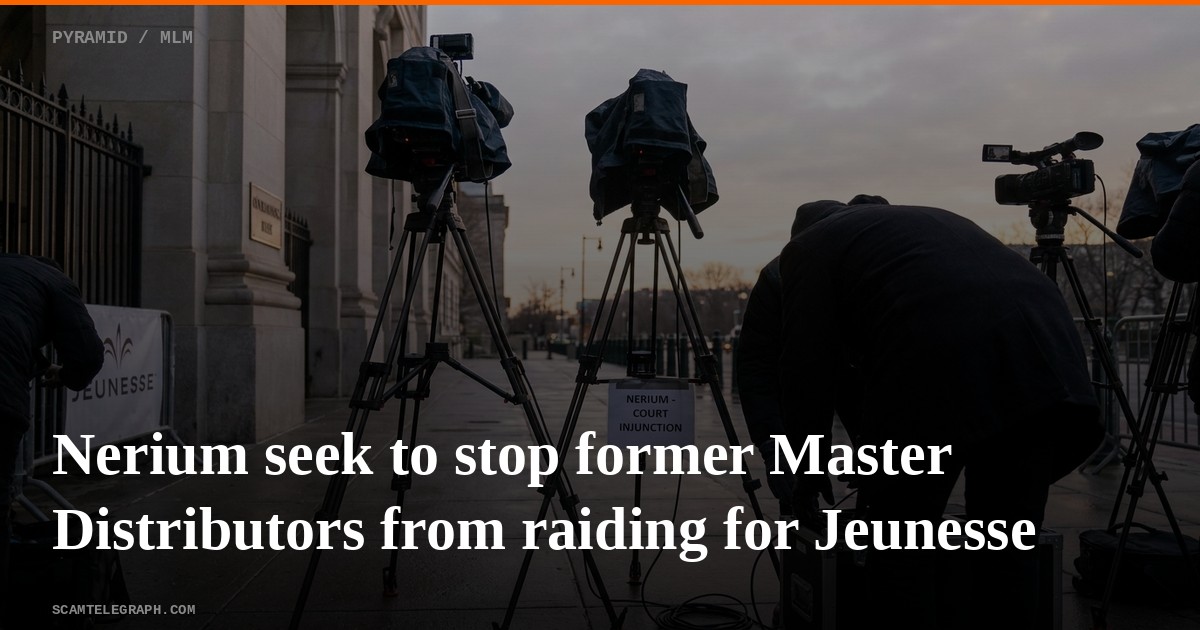
A legal battle is unfolding in federal court over allegations of distributor poaching between multi-level marketing firms Nerium International and Jeunesse Global. Nerium is suing former top distributors Mark and Tammy Smith, who claim founder Jeff Olson promised them a lucrative deal to leave Prepaid Legal and join Nerium. The Smiths later departed Nerium for Jeunesse, taking their sales network with them, which prompted Nerium’s lawsuit.
Jeff Olson founded Nerium with the stated goal of rapid expansion. He recruited Mark and Tammy Smith, then top earners at Prepaid Legal, to his new venture. The Smiths allege Olson presented them with a secret compensation plan if they joined Nerium. Olson’s account disputes this, stating the Smiths approached him and that he discouraged them from joining his company.
The lawsuit centers on whether Olson made a binding agreement to provide the Smiths with preferential treatment. Court documents indicate Nerium did place the Smiths, operating through an LLC, in a superior position within the company structure. They were given an established downline, inheriting existing recruits and their associated commissions rather than building the network themselves. Nerium characterizes this as exceptional support, while the Smiths view it as a broken promise. Olson contends the Smiths’ legal claims are driven by personal motives.
During their time with Nerium, the Smiths achieved high ranks, including Chief Field Officers, and earned substantial income. Nerium asserts their success was largely predetermined. The situation highlights a common dynamic in the direct-sales industry: recruiting high-performing individuals, granting them advantages, and then facing the consequences when those individuals seek new opportunities.
Nerium is now seeking court intervention to prevent the Smiths from recruiting their former downline from Nerium to Jeunesse. This legal action mirrors the very recruitment tactics Nerium itself is accused of employing. The core of the dispute remains the nature of the Smiths’ initial recruitment and the terms under which they operated within Nerium.
The Smiths’ case against Nerium was initially dismissed by a Texas federal judge in September 2022, who found Nerium’s claims too vague. However, an appeals court revived the case in March 2024, ruling that Nerium had adequately pleaded its claims for tortious interference with contract and business relations. The Smiths had argued that Nerium’s claims were barred by the statute of limitations. The U.S. Court of Appeals for the Fifth Circuit disagreed, stating Nerium’s lawsuit was filed within the required timeframe after they discovered the alleged misconduct. The case has been sent back to the lower court for further proceedings.
 Charles Scoville