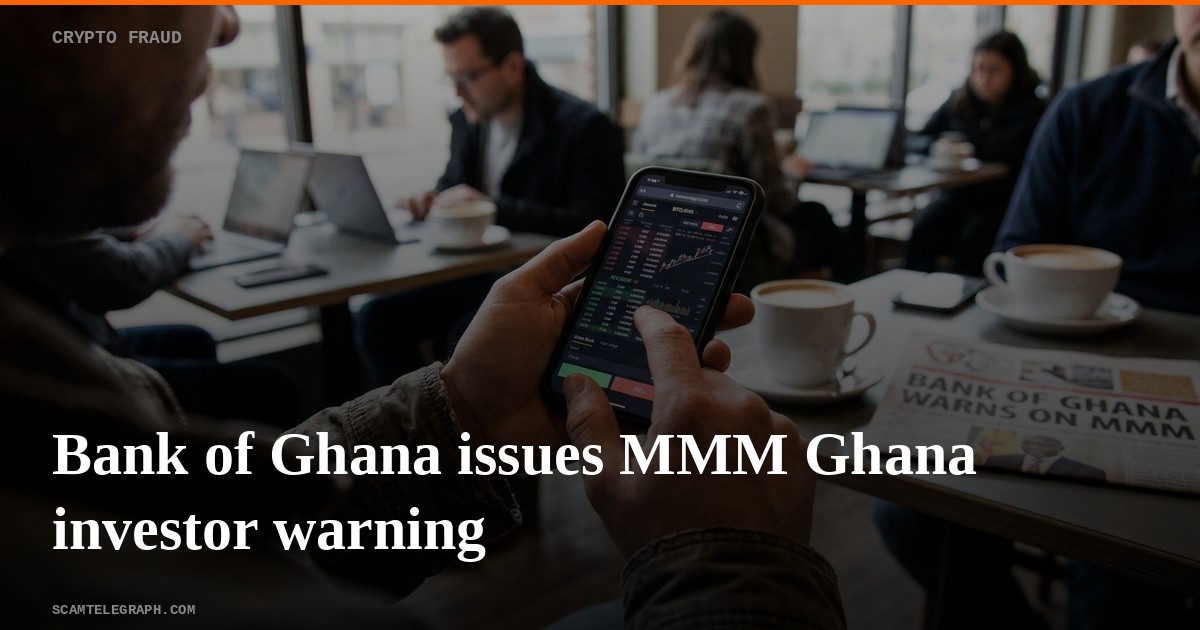
The Bank of Ghana issued a stark warning on May 10 to the public regarding an entity known as MMM Ghana. This organization, which has been observed operating from a virtual office and moving between various locations, is actively soliciting deposits from citizens. The central bank explicitly stated that MMM Ghana is not licensed to conduct any deposit-taking activities.
The Bank of Ghana’s notice highlighted that MMM Ghana mobilizes funds from the public, operating without authorization. Anyone engaging in transactions with this entity does so entirely at their own risk, the regulator cautioned. The warning comes as the scheme appears to be gaining traction despite its dubious financial model.
MMM Ghana is part of the broader MMM Global network, a Ponzi scheme founded by Sergey Mavrodi. This international scheme has a history of collapse in multiple countries, leaving investors with significant losses. The modus operandi involves promises of high returns through a "provide help, get help" system, which ultimately relies on new investors' money to pay off earlier participants.
Following the collapse of MMM Global, numerous imitator schemes emerged. MMM Ghana is one such entity that has continued to operate. While many of these copycat schemes have also failed, a persistent few, like MMM Ghana, continue to solicit funds. The scheme’s website traffic saw a dip in early 2017 but began to increase again in mid-April, indicating renewed activity.
Estimates suggest that approximately 10,000 investors in Ghana have already fallen victim to this scam. The Bank of Ghana’s intervention aims to prevent further individuals from losing their money. The regulator’s stance is that MMM Ghana is operating outside the legal financial framework, and participation is inherently risky.
The history of MMM Global’s operations in Africa is marked by substantial financial losses for participants. Countries such as South Africa, Zimbabwe, and Nigeria have previously seen MMM schemes collapse. The digital nature of these schemes, often utilizing cryptocurrencies like Bitcoin, has historically made it difficult to trace funds and hold perpetrators accountable.
The Bank of Ghana’s announcement serves as a critical alert to consumers about the dangers of unregulated investment schemes. By clearly stating that MMM Ghana lacks the necessary licensing for deposit-taking, the bank is attempting to shield the public from a known fraudulent operation. The message is clear: engagement with MMM Ghana carries significant financial peril.
 Boris
Boris Manoj Kumar