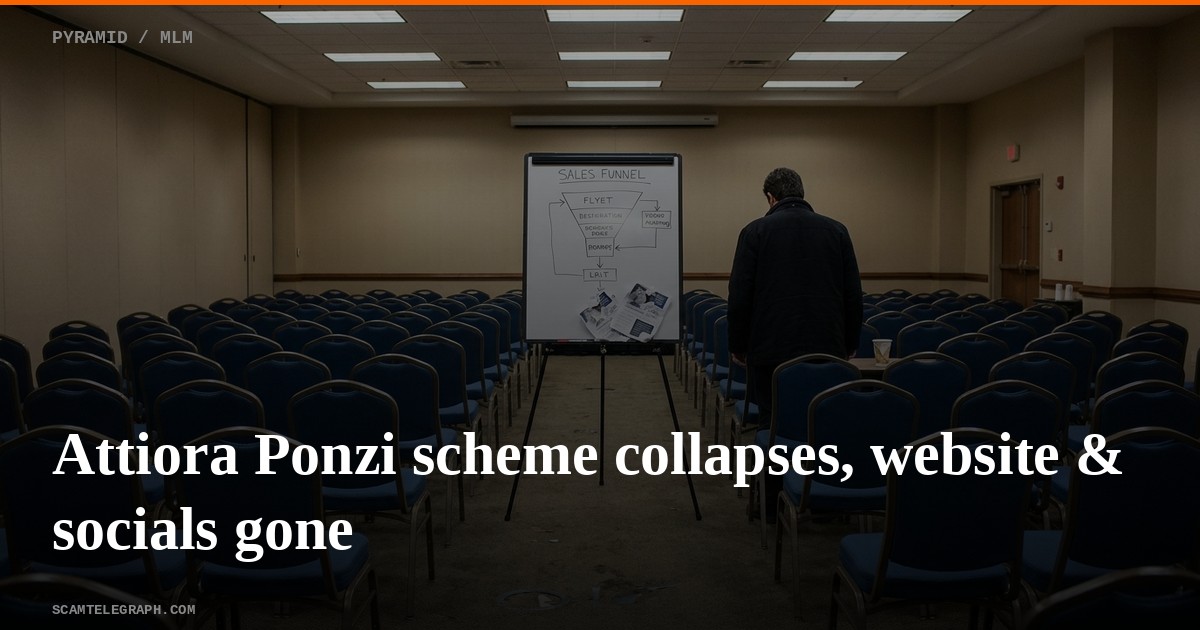
The Attiora Ponzi scheme ceased operations abruptly in May 2022, with its website and all associated social media accounts disappearing over the past 24 hours. Attempts to access the Attiora site now return a Cloudflare error, indicating the server has been pulled offline. This sudden disappearance is a common sign of fraudulent schemes collapsing.
Attiora's official YouTube, Facebook, and Instagram profiles also vanished. The coordinated shutdown of digital assets suggests an exit-scam by the scheme's administrators. This collapse occurred during a period of significant growth for Attiora. SimilarWeb traffic analysis shows monthly visits to the Attiora website increased 44% from March to April 2022. This peak activity likely generated substantial funds for the operators before they closed down.
Thousands of investors lost money in the scheme. Germany accounted for 18% of the website's traffic, followed by France at 14%, Guadeloupe at 10%, Mauritius at 7%, and Russia at 5%. These figures suggest a wide geographical spread of victims targeted by the fraud.
Attiora operated as a "Boris CEO" Ponzi, a common tactic where scammers invent a fictional, often vaguely European, chief executive to lend credibility to their operation. This fake leader typically appears in pre-recorded videos shot in rented office spaces. Attiora promised investors daily returns of up to 4%, a rate unsustainable by any legitimate investment. Funds from new investors paid earlier participants, the defining characteristic of a Ponzi scheme.
The scheme initially introduced an ATRC coin, marketed as its proprietary cryptocurrency. This type of digital asset often serves as an exit-scam mechanism, allowing operators to dump worthless tokens on victims as the scheme falters. However, the Attiora administrators abandoned the ATRC coin strategy, opting instead for a direct cash grab. The broader cryptocurrency market downturn in spring 2022 may have made a traditional crypto exit less appealing or profitable for the scammers.
Attiora falsely claimed to operate from Australia. The scheme even provided investors with a registration certificate from the Australian Securities and Investments Commission (ASIC). This tactic exploits a loophole in ASIC's system. The regulator's registration process is primarily declarative; it does not verify the legitimacy or financial solvency of a registered entity. Scammers frequently use ASIC certificates to feign compliance, knowing that by the time financial reporting deadlines arrive, the scheme will have already collapsed, or they will simply ignore the requirements.
ASIC generally does not actively pursue missed filing deadlines for such entities. This regulatory gap makes it easier for fraudulent operations to obtain an official-looking document without facing significant oversight. The use of ASIC registration, combined with marketing videos filmed in rented offices in Estonia featuring actors, follows a known pattern. This profile typically indicates operators based in Russia or Ukraine.
Victims of financial fraud often face complex challenges in recovering lost assets. Individuals who invested in Attiora should contact their national financial regulatory bodies and law enforcement agencies. These agencies can provide guidance on reporting the crime and potential avenues for recourse, though recovery remains difficult in international Ponzi cases.
 Boris
Boris